
One of the key features as we move into the next generation is storage, notably the upgrade to using solid state hard drives (SSD) over the slower hard disk drives (HDD).
Before we start to look at what these new advancements bring us, it’s good to have a look at where we came from.
Playstation 4 Storage
Each model of the Playstation 4 launched with a hard disk drive, anywhere from 500gb to 1TB.
In RAW storage terms this was nothing to overlook, but just how fast were they? Hard disk drives are notably slower than solid disk, even more so when they are the 2.5”, 5200 RPM notebook variety used within the Playstation 4 models.
Whilst the Playstation 4 did support user-upgradeable disks, it was the storage controller itself that stopped people from reaping the benefits of upgrading the Playstation 4 to a SSD.
The Playstation 4 featured a SATA-II based storage controller, the maximum speed for SATA-II is 3 Gbit/s or around 300 MB/s.
So whilst this would not be a bottleneck for the hard disks shipped with the Playstation 4, they would realistically have a throughput of around 50-100MB/s, it would limit any future advancements that a SSD would provide.
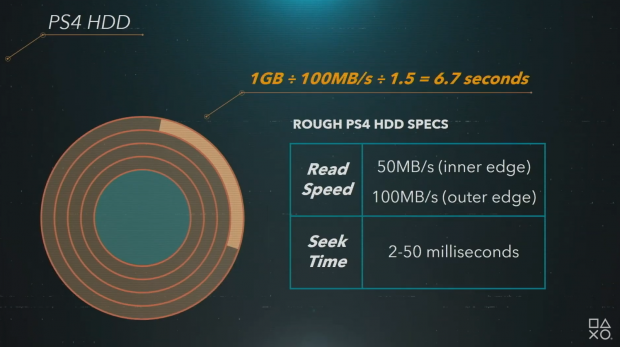
The release of the Playstation 4 Pro upgraded the storage controller to SATA-III which has a maximum speed of 6Gbit/s, or around 600MB/s. However the Pro still shipped with the same hard disk drive type.
Whilst upgrading a Playstation 4 Pro to an SSD did see marginal improvements with regards to speed and texture loading, bottlenecks from the overall system architecture did stop the full power of an SSD from being unleashed.
PCIe 4.0 NVMe
The Playstation 5 sought to overcome these bottlenecks with the introduction of a PCIe 4.0 customised NVMe based solution.
NVMe takes a somewhat different approach to the standard disk drive. Instead of being in a larger form factor connected by a SATA and power cable they are connected directly to the PCIe bus and look much like an expansion card.
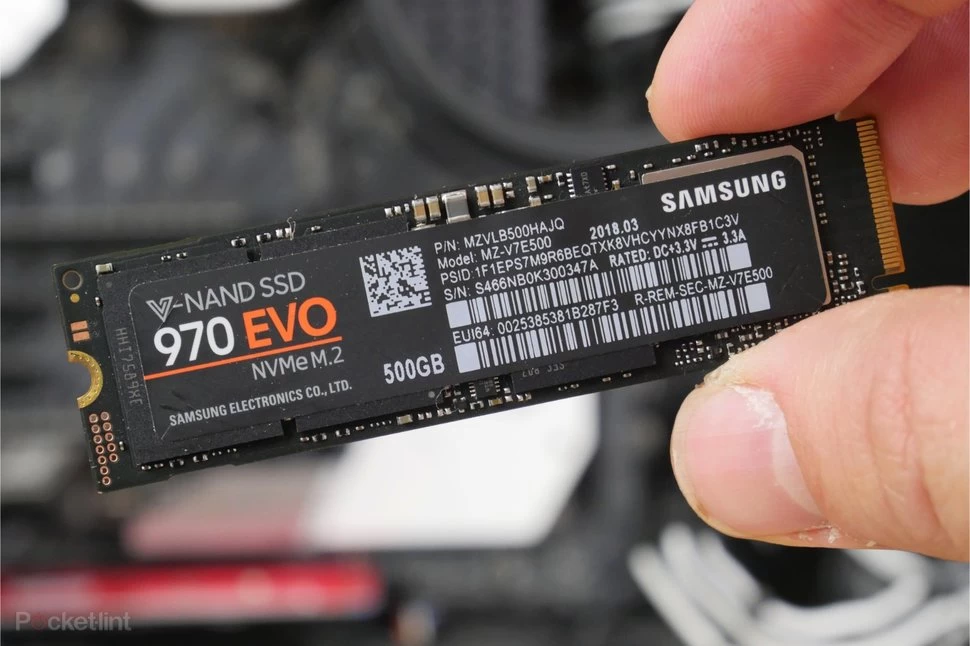
PCIe 4.0 takes the storage controller to the next level, and as the name suggests provides up to 4 lanes, allowing more data to flow per lane, across more lanes, thus increasing the overall data transfer speeds.
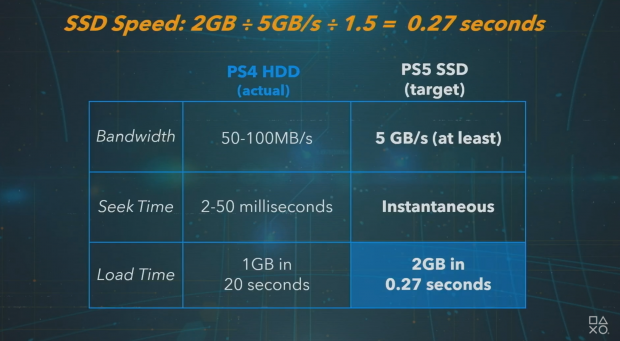
The aim of this new storage solution was to make data loading and streaming a thing of the past, with the custom SSD able to load 5GB of data in a single second.
What We Should Expect
Expectations are high, but results will be somewhat limited to how and if developers choose to take advantage of the potential of the SSD solution. Loading times for PS4 games should be greatly increased, for Playstation 5 games they should be near-instant. Texture streaming should also see a great improvement with less pop-ins and greater draw distances become achieveable.
Games should also install faster, although this will be limited by either the download speed or the UHD disk drive’s maximum speed. Updates are another area that should see a massive improvement over previous generation.
Overall, we should expect improvements across the board with Playstation 4 games, however Playstation 5 should see massive improvements and greatly improve the console gaming experience.